Advancing Knowledge and Supporting the Halal Industry through Applied Research
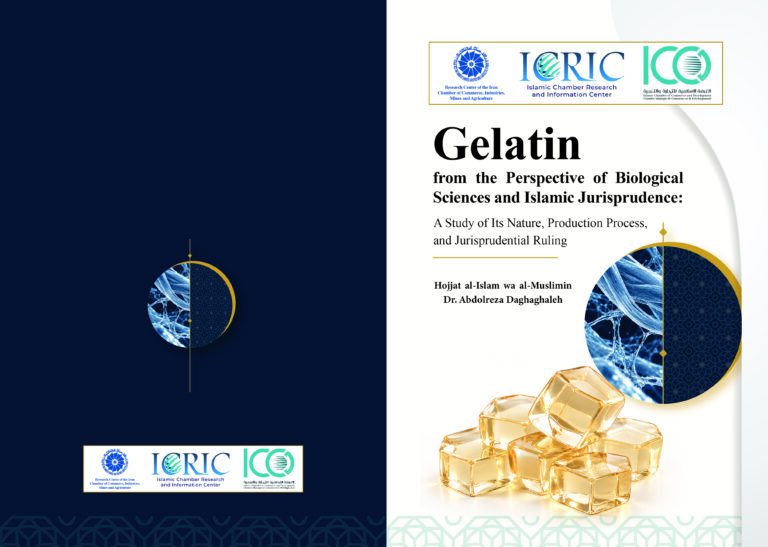
As part of its research mission to address emerging economic, commercial and industrial issues relevant to Islamic countries, the Islamic Chamber Research and Information Center (ICRIC) has undertaken a comprehensive study entitled “Gelatin from the Perspective of Biological Sciences and Islamic Jurisprudence: A Study of Its Nature, Production Process, and Jurisprudential Ruling.”
The research, authored by Hojjat al-Islam wa al-Muslimin Dr. Abdolreza Daghaghaleh, addresses one of the important technical and jurisprudential challenges facing the global halal industry: determining the status of gelatin derived from different animal sources and examining the conditions under which it can be considered halal.
The initiative reflects ICRIC’s commitment to conducting applied research on issues that affect trade, production, market access and economic cooperation among Islamic countries. By bringing together scientific evidence, industrial knowledge and Islamic jurisprudential perspectives, the study seeks to provide a reliable knowledge base for stakeholders involved in the production, certification and use of gelatin-containing products.
Understanding Gelatin and Its Industrial Significance
Gelatin is a protein-based substance primarily obtained through the processing of collagen found in animal skin, bones and connective tissues. Due to its distinctive functional properties, including gel formation, stabilization, emulsification and texture modification, it is widely used in the food, pharmaceutical, medical, cosmetic and other industrial sectors.
Its applications range from confectionery, dairy products, desserts and meat products to pharmaceutical capsules, medical materials, personal care products and specialized industrial formulations.
However, the widespread use of gelatin raises important questions for Muslim consumers and businesses, particularly because commercial gelatin may originate from different animal species, including cattle, pigs, fish and poultry. The source of the raw material, the animal’s slaughter status and the production process can all influence its acceptability under Islamic jurisprudence.
These considerations are especially significant for manufacturers and exporters seeking to access halal markets, where compliance with religious requirements, product traceability and credible certification systems are essential.
A Comprehensive Examination of Scientific and Industrial Dimensions
The study begins by examining the biological nature of gelatin, its relationship with collagen, and its physical and chemical characteristics. It identifies the principal raw-material sources and explains the main production methods, including acid-treated gelatin (Type A) and alkaline-treated gelatin (Type B).
It also provides an overview of the industrial production process, from raw-material reception and preparation to chemical treatment, extraction, filtration, concentration, sterilization, drying, quality control and packaging. This technical examination helps clarify the stages at which raw-material origin, processing aids, production equipment and the prevention of cross-contamination become particularly important.
Another major component of the research concerns the global gelatin market and its industrial applications. Drawing on industry reports and published research, the study examines estimated consumption across food and beverages, pharmaceuticals, cosmetics and personal care, photography, printing and other technical sectors.
The food and beverage industry is identified as the largest application segment, followed by pharmaceutical uses. The study also considers emerging trends affecting future demand, including the growing use of collagen peptides, dietary supplements, advanced pharmaceutical materials and biodegradable products, alongside the development of plant-based alternatives and non-gelatin capsule technologies.
By examining these developments, the research highlights the importance of understanding both the industrial value of gelatin and the changing market requirements associated with halal, sustainable and traceable raw materials.
The Central Jurisprudential Question: Istihalah
One of the most significant aspects of the research is its examination of istihalah, the concept of substantial transformation in Islamic jurisprudence.
The central question is whether the conversion of collagen into gelatin during industrial processing constitutes a complete transformation of the original substance and, consequently, whether such transformation changes its jurisprudential status.
The study comparatively examines the views of Imami and Sunni scholars, different Islamic schools of jurisprudence, and selected international jurisprudential institutions and assemblies. It presents the arguments supporting the permissibility of gelatin when complete transformation occurs, as well as the opposing position that considers the transformation insufficient to change the ruling associated with an originally prohibited or improperly slaughtered animal source.
The research demonstrates that there is no uniform jurisprudential position on this matter. Differences in the interpretation of istihalah, together with varying assessments of the scientific changes occurring during production, have resulted in different rulings among scholars and institutions.
Rather than presenting a single universally accepted ruling, the study seeks to clarify the scientific and jurisprudential foundations of these differences and their implications for halal certification and industrial practice.
Practical Requirements for Halal Gelatin Production
Moving beyond theoretical discussion, the study identifies practical requirements for producing gelatin that meets halal criteria. These requirements cover the entire production and supply chain, including:
- Raw-material sourcing: Using eligible animal sources, such as cattle and sheep slaughtered according to Islamic requirements, or qualifying fish sources.
- Islamic slaughter requirements: Ensuring that applicable slaughter procedures are properly observed and documented.
- Processing compliance: Verifying that chemicals, enzymes, processing aids and other auxiliary materials comply with halal requirements.
- Production-line segregation: Preventing contamination through appropriate separation of halal and non-halal production lines and equipment.
- Storage and transportation: Maintaining the integrity and traceability of raw materials and finished products throughout storage, packaging and distribution.
- Certification and monitoring: Applying recognized halal standards and ensuring credible certification and continuous verification.
The study refers to relevant international frameworks, including OIC/SMIIC 1:2019, OIC/SMIIC 22:2021, Malaysia’s MS 1500:2019 and the Codex Alimentarius guidelines. These references demonstrate the importance of harmonized technical and certification requirements in supporting confidence in halal gelatin products.
Research Contribution and Relevance to the Islamic Economy
The findings underline that the halal status of gelatin cannot be assessed solely on the basis of the final product’s name or appearance. The origin of the raw material, slaughter conditions, manufacturing procedures, prevention of contamination, traceability and the applicable jurisprudential interpretation must all be considered.
Given the existing differences among jurisprudential authorities regarding istihalah, the study emphasizes the practical importance of using gelatin from verified halal sources and relying on credible certification systems.
From an economic and commercial perspective, these findings are relevant to food and pharmaceutical manufacturers, halal certification bodies, regulatory institutions, researchers and businesses involved in international trade. Greater transparency in sourcing and production, together with reliable certification and internationally recognized requirements, can help reduce uncertainty, strengthen consumer confidence and facilitate access to halal markets.
By undertaking this research, ICRIC demonstrates its role as a research-oriented institution committed to identifying important issues affecting Islamic economies and translating specialized knowledge into practical insights for industry and trade. The study of halal gelatin is an example of how interdisciplinary research can contribute to addressing technical and regulatory challenges, supporting the development of the halal industry and strengthening economic opportunities across Islamic countries.
Research Title: Gelatin from the Perspective of Biological Sciences and Islamic Jurisprudence: A Study of Its Nature, Production Process, and Jurisprudential Ruling
Author: Hojjat al-Islam wa al-Muslimin Dr. Abdolreza Daghaghaleh
Research Institution: Islamic Chamber Research and Information Center (ICRIC)
the Book is available at ICRIC website: https://icricinternational.org/research