Chinese exporters are moving into halal food, cosmetics and fashion, but success in this vast market depends on something much more difficult to manufacture than cheap goods: trust.
In the wholesale markets of Yiwu, the Chinese city known for supplying the world with inexpensive goods, buyers can find prayer rugs, Quran stands, modest clothing, Ramadan lanterns and crescent-shaped decorations.
For Chinese manufacturers contending with weaker demand at home and new trade barriers in the West, the market for halal goods offers an attractive source of growth.
The products offer a glimpse of a much bigger business. Having become the world’s leading producer of solar panels, electronics and electric vehicles, China is now gaining ground in goods aimed at Muslim consumers.
China exported $32.5 billion worth of halal-related food, clothing, pharmaceuticals, cosmetics and other products to the 57 member states of the Organization of Islamic Cooperation in 2023, according to the latest available data from research firm DinarStandard. That made China the group’s largest supplier, ahead of India and Brazil.
Muslim consumers spent $2.6 trillion in sectors including food, clothing, pharmaceuticals, cosmetics, media and travel in 2024, according to DinarStandard’s latest State of the Global Islamic Economy report, and that figure is projected to reach $3.56 trillion by 2029. Halal food accounted for $1.53 trillion of that spending.
For Chinese manufacturers contending with weak demand at home and higher trade barriers in the U.S. and Europe, that market offers an attractive source of growth.
Many of the biggest Muslim consumer markets are in Southeast Asia, the Middle East and Central Asia, where China has spent years building ports, railways and commercial ties. Its factories can supply everything from frozen meat and candy to lipstick, medicine capsules and sports hijabs. Modest fashion alone is a $347 billion global market, DinarStandard’s data show.
Beijing is seeking closer economic ties with Muslim-majority countries even as it faces international condemnation over the mass detention and repression of Uyghurs and other predominantly Muslim minorities in the Xinjiang autonomous region.
There is an uncomfortable contradiction in China’s pursuit of those consumers. Beijing is seeking closer economic ties with Muslim-majority countries even as it faces international condemnation over the mass detention and repression of Uyghurs and other predominantly Muslim minorities in the Xinjiang autonomous region. China denies committing human-rights abuses and says its policies were intended to fight terrorism and extremism. The United Nations human-rights office concluded that some violations documented in the region may constitute crimes against humanity.
“Halal,” meaning permissible under Islamic law, is a designation most typically associated with procedures for animal slaughter and with the absence of pork or alcohol in consumable products. But the rules extend much further. Some cosmetics, medicines and supplements contain gelatin, animal fats, alcohol or other ingredients whose origins matter to observant consumers. Items could also come into contact with prohibited substances while in storage or during transportation.
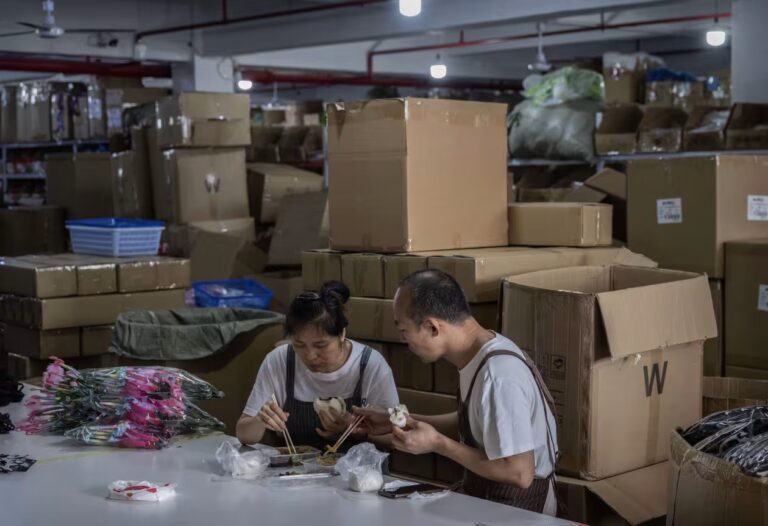
China’s advantage is its ability to quickly and cheaply produce a vast range of goods. A factory producing conventional cosmetics or packaged snacks can adapt them for Muslim customers. Chinese suppliers can also make private-label products for companies in Indonesia, Malaysia, Saudi Arabia or the United Arab Emirates that know their local markets but lack China’s manufacturing scale.
What is more difficult is proving that a product is genuinely halal. There is no certificate that is accepted everywhere. China has several local standards and certifying bodies but no unified national halal-certification standard, and exporters must satisfy different regulators, religious authorities and certification organizations in every market they enter — tracing ingredients through layers of suppliers, separating production lines and paying for audits market by market, often with no guarantee that a certificate earned in one country carries any weight in the next.
Indonesia shows how demanding the rules are becoming. The world’s largest Muslim-majority country is extending mandatory halal-certification requirements on Oct. 18 to cover a wider range of products, including goods from abroad, and its regulators have been working with foreign certification bodies as companies prepare for the change.
The stakes are especially high for Chinese brands hoping to sell directly to consumers rather than just manufacture goods for local companies. A low price may secure an order, but it will not necessarily persuade a shopper.
“We replaced all fragrance ingredients containing alcohol and set up a dedicated production line. We changed the equipment-cleaning process three times,” said Lin Wei, founder of a Zhejiang cosmetics company operating in a showroom at the Yiwu International Trade Market.
Certification costs could separate Chinese companies that remain anonymous suppliers from those able to build recognizable brands. Larger manufacturers may have the advantage because they can afford dedicated production lines, international audits and the paperwork required to enter additional countries.
“Trust in quality created by certification can greatly reduce consumers’ decision-making costs,” said Duan Yunchao, chairman and CEO of Hunan Zhongma Jiakai International Trade Services, a business that helps Chinese companies expand overseas.
China has repeatedly shown that it can dominate industries where scale, speed and cost matter most. The halal economy presents a different test, one in which religious credibility, cultural knowledge and supply-chain transparency may matter as much as price.
China’s next export boom may not come from another futuristic technology. It may instead depend on persuading consumers that the food they eat, the medicine they take and the cosmetics they use were made according to rules they believe in.
Tanner Brown covers China for MarketWatch and Barron’s. link: https://www.marketwatch.com/story/now-china-wants-to-become-the-shop-floor-for-the-muslim-world-9ffd785a?utm_source=chatgpt.com