
A trade agreement between the UAE and the five-nation Eurasian Economic Union — Russia, Kazakhstan, Belarus, Armenia and Kyrgyzstan — entered into force on October 6, eliminating or reducing tariffs across 85% of tariff lines and covering 95% of bilateral trade by value.
Non-oil trade between the UAE and the EAEU reached more than $33.3 billion in 2025, up 15% on the previous year. The Eurasian Economic Commission expects the agreement to add at least $5–6 billion annually to that figure.
“The agreement has an asymmetric effect on the two sides’ tariff commitments. For the UAE, it mainly expands the range of goods traded duty-free, while for the EAEU the main effect is lower tariffs,” the Russia-UAE Business Council said, adding that for established trade flows, the deal would make it easier for companies to bring new products to market.
The asymmetry reflects the two sides’ starting positions. UAE import tariffs are generally low, with most goods subject to rates of 0% or 5%. EAEU tariffs can reach 80% on some product lines, meaning the cuts represent a more substantial change for exporters selling into the bloc. Russia’s Resource Agribusiness Group noted that the UAE’s existing 5% tariff on crude sunflower oil from the EAEU will fall to zero in the first year.
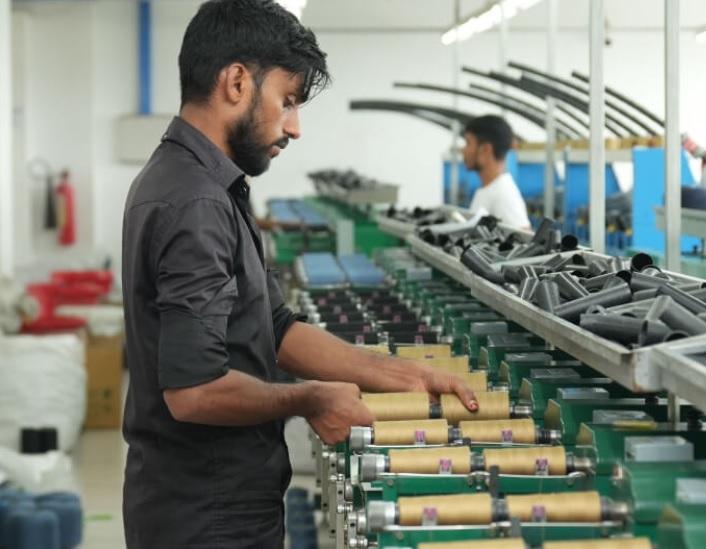
For UAE-based manufacturers, lower EAEU tariffs open a new incentive to produce or process goods in the Emirates for export into the bloc. Abu Dhabi coffee producer Maatouk 1960 Factory, which imports green beans from Latin America, Africa and Asia and packages them as UAE-origin products, plans to begin shipments to the EAEU in the first quarter of 2027.
The agreement also raises concerns in some EAEU industries. The Russian jewellery sector faces the prospect of gold and silver jewellery from the UAE — currently subject to a 10% import duty — entering at zero tariff once the deal takes effect. Questions have been raised about whether goods from third countries such as China or India could be routed through the UAE to benefit from the preferential rate after simple repackaging.
Serafima Pankratova, counsel at Balayan Group, a Moscow-based law firm, said the main legal challenge would be proving the origin of goods. Customs authorities may also verify eligibility for preferential treatment after clearance and recover duties if origin requirements are not met, she said. Dmitry Antonov, senior vice-president of Resource, cautioned that tariff reductions alone would not be sufficient, pointing to product approvals, certification, logistics and local distribution as core requirements for sustainable trade.
The deal aligns with Dubai’s D33 economic agenda, which aims to more than double manufacturing value added by 2033, and with the UAE’s broader strategy of using its expanding trade agreement network to attract manufacturing and processing activity. Although the full impact will take time to materialise, the agreement is expected to shift how companies structure supply chains between the two markets.